

I gentrified Kendrick Lamar
And I actually am sorry about it.

Time to read: 12 mins
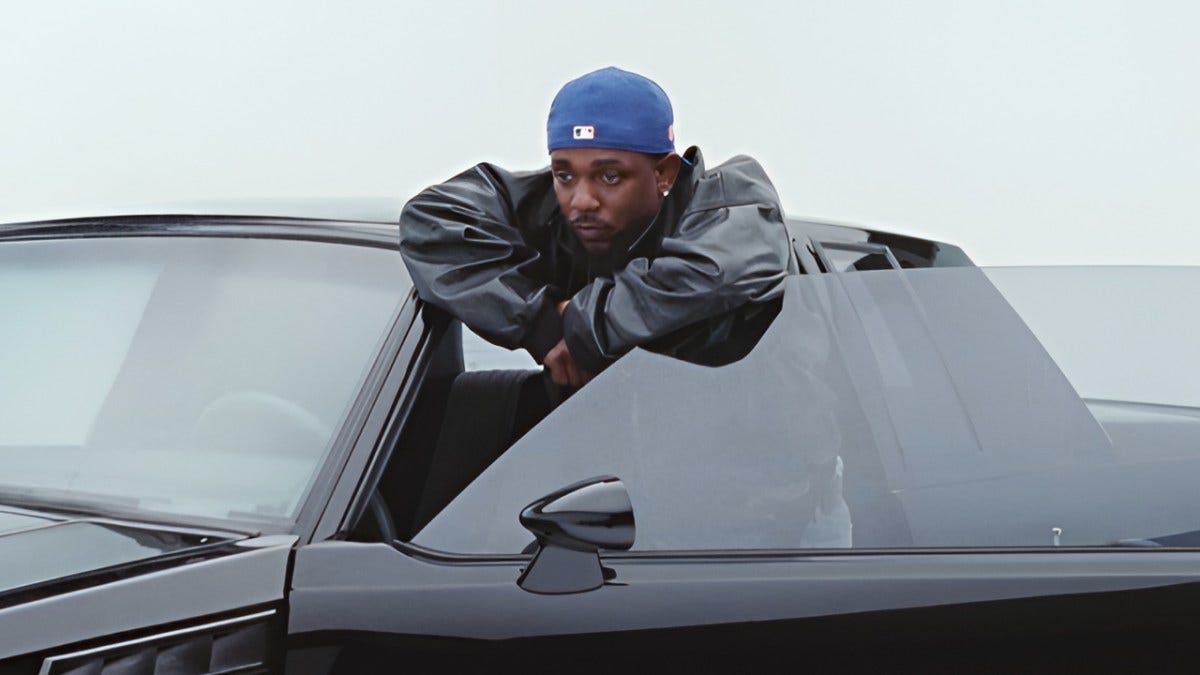
I can vividly remember the first time I heard Kendrick Lamar.
I was thirteen years old: a goofy kid, with my first few pimples on a face not yet old enough to be caked in the forthcoming Maybelline Dream Matte Mousse, hair in a side plait like my hero Katniss Everdeen, school uniform skirt only slightly above my knees, too anxious to roll it higher and risk the telling off.
I was sitting on a school coach at 7:45am - a time earlier than a preteen should ever see, let alone be dressed and commuting at - puttering along country lanes and undulating green valleys, where the odds of seeing a police car are several magnitudes less than seeing a cow. My best friend Georgia, a girl so many leagues cooler than me, I felt, handed me one earbud of the wired headphones plugged into her white bejewelled Blackberry. Georgia’s patchy fake tanned fingers scrolled and clicked; her clumpy, heavy eyelashes moving exaggeratedly as her eyes searched the screen. Her thumb pressed down.
“Pour up. Drank. Head shot. Drank. Sit down. Drank. Stand up. Drank.”
I looked out on the scenes passing by me, a world away from Compton, California, and heard, for the first time, a voice that would become unmistakeable to me; an artistry I knew - somewhere deep and unconscious - was unlike anything I had ever heard, and more important than any of the other songs we listened to.
This was 2012, the year of Call Me Maybe, Starships, Somebody That I Used to Know. For the life of me, I cant work out where Georgia got her music taste. Kendrick wasn’t the only music we listened to that was so divorced from the pop charts our friends loved - I can still rap every word of 212 by Azelia Banks, not that I knew what a single word of that absolutely filthy song meant at the time. We listened to Frank Ocean, very early Tyler the Creator - before he was a Flower Boy and back when he wanted to stab Bruno Mars in his gotdamn oesophagus - and Tyga.
Georgia was a blonde, blue eyed girl who lived in a small community around an old mill - there were about 20 small Cotswold houses and one enormous mansion our friend Amelia lived in, which had 14 bedrooms and its own lake. Her brother was sweet, a bit misunderstood, and nerdy. Her mum was young and divorced from her older dad. They were normal countryside people. They, and I, were the absolute last people any of those rappers were thinking about when they were making their music. And yet, sitting on the bus, day in and day out, Georgia and I blasted their songs into our ears at the appropriate teenaged full volume, as we pootled along to our cathedral school in the biggest town in our area (it had a population of a whopping 120,000).
Years and years later, I was living somewhere that was much less alien from the reality of my favourite rappers. I had returned, some 14 years after my family had moved away, to my ‘ancestral homeland’ of south east London, and more specifically, Peckham.
Peckham is my favourite place in the world. You’ll be hard pressed to find many people who share that opinion with me. I moved to Peckham in my second year of uni, 2018. This is a few years after the Peckham gang wars that defined the area had peaked, giving it the hateful name of “Peck’nam” reflecting the brutality of the Vietnam war, but no so long ago that it was far from anyone’s mind as we marched through the streets, hands deep in our pockets and heads down.
Peckham to me is the feeling of walking up the Rye in the summer, when all the African groceries spill the glorious smells of their spices into the street, where it mingles with the smokey BBQs of uncles selling chicken from the side of the road. Aunties sit on chairs outside their shops, heckling people whose hair isn’t freshly done to come inside and be combed and braided within an inch of their lives. Halal butchers wheel unruly shopping trolleys packed with meat as high as they are tall down the road, unable to nimbly dodge the crowds of people pointing at saltfish and picking up yams, asking the store owner for prices which he reels off automatically.
Peckham is that way to me because I have the immense privilege of not being a working class Black boy who lives in an estate here. I don’t have to reckon with the choices those kids have to make. I get to enjoy feeling like I get it, like I am part of this community, and that I understand what it is to be from Peckham, but I really really don’t, because I don’t have to.
I have a rightful claim to Peckham - both my parents grew up in SE London, my mum went to Harris Girls just off Peckham Rye Common, and my grandfather taught at Peckham Boys, now Harris Boys. I was born in Penge, and despite growing up in the countryside, I have now lived in London almost as long as I lived there - 14 years in the country, and a total of 13 years in London (nine of those consecutively as an adult). I know all the shops, and the cafes and restaurants, I know a lot of the owners and staff - I have nice, London connections with people where we both recognise each other but in a commitment to the London bit, never say hi, just exchange an awkward glance or, if we’re feeling gushy, a British tight-lipped acknowledgment. I sometimes bump into friends on the street and have a catch up. To me, it is home.
But it is also somewhere I have no authorship over.
It was on the 37 bus, from Peckham to the worst job I’ve ever had - not at all coincidentally in Clapham (evil) - that I put my headphones in, and clicked on DAMN.
“Is it wickedness? Is it weakness? You decide. Are we gonna live or die?
So I was talking a walk the other day…”
God, that album. That Pulitzer Prize winning album. That unmistakable voice, speaking about violence, pride, resistance, luck, work, ethics, racism - the same genius that I had felt as a kid but now, with a degree and a half under my belt, I could reckon with it. I could understand what he was saying and why it was important. I got it. And listening to that album made my brain fire in the exact same way as the readings I was doing for my Master’s degree did. It was as dense, as layered, as sociological and political and complex as the greatest writing by the greatest thinkers. But it also rhymed and was rhythmic, and engaging and accessible to people who weren’t confident that they could cough up large chunks of money to give to an institution to get that same feeling and a certificate. And it is fucking great music.
I spent weeks and weeks listening to the album on repeat - a habit I’ve had all my life of obsessing over one piece of music and wringing it dry of any emotions it originally sparked in me - although with this album, I kept finding new things to fixate on. But then I turned to his other albums: good kid, m.A.A.D city; To Pimp A Butterfly; and when it came out Mr. Morale & the Big Steppers. Each one, theses in themselves; combined, a treatise on Blackness: being Black while growing up, while working, while dancing, while loving. Each one, exhausting and energising my brain with the worlds he described so clearly that I felt I understood them, but educating me that I couldn’t fully understand them; that a half white, half Brown girl from a middle-class English family can only guess at what it is to be a young Black kid from Compton, even when holding his albums as a flashlight into that world.
I was in Amsterdam with my husband when Not Like Us dropped. I feel like generations before us all had moments where they knew where they were when it happened - Michael Jackson dying, 9/11, the Kennedy assassination etc. This is ours, or at least some of ours - hearing Kendrick rap: “Why you trolling like a bitch, ain’t you tired? Tryna strike a chord and it’s probably A Minoooooooooooor”!
With those words, Kendrick was thrust into a new form of celebrity, a whole level above the A Lister fame he was already enjoying. He joined the ranks of celebrity that meant that even people in the most remote parts of the world would probably have some recognition of him. He was ubiquitous.
And with this ubiquity came suburban Lululemon adorned mums in Ottawa, and Mormons in Utah, and millionaire Parisiennes, Saudi Princes in Mayfair, and East London carabiner-on-their-Carhartts aspirational playwrights all rapping along to the diss tracks of a man whose entire body of work, prior to these few songs, had been to shine a spotlight on the struggles of poverty and anti-Black racism. For years, Kendrick had been bolstered by his community, who recognised his talent and genius and allowed him to reach fame. In those years, these people did not engage with his music. It wasn’t until his music had no other message than “fuck this guy in particular” that he was taken up universally; only when he was all entertainment, no politics.
When I got tickets to see him on his tour in July this year, we paid for the spots right at the front. I wanted to be as close to my favourite musician as I could - to experience him as clearly as I could. In this area, there were a few young Black people, a few in merch, but by far, we were outnumbered 3 to 1 with 14 year old white boys, filming the whole thing on Snapchat, and moshing to N95. Two people about our age stood near us, and as two rancid smelling teens pushed in front of us, not realising (I’ll give them the benefit of the doubt) that their recent growth spurt put them a head taller than us, I and the woman near me both mimed kicking the kids in the back of the legs. We caught each other’s eyes and smiled and laughed. And then we moved to find somewhere we could see the stage.

The first piece I ever wrote on Substack was about how I attended a march in Peckham to oppose gentrification in the form of Berkley Homes’ proposed luxury flat tower block being plonked on Peckham’s Aylesham centre. It was about how, looking around at the people on that march with me, I felt a little bit of hope for the world.
A few months later, I came across this clip on Instagram (I describe below if you don’t have time to watch):
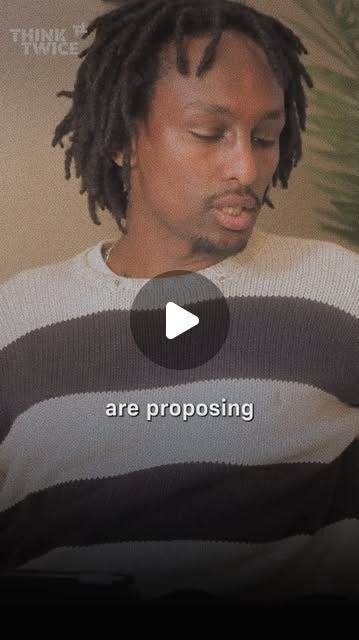
Think Twice is a really really great podcast. Beno and Tef are incredibly smart guys, discussing important topics with nuance and patience, backed up by a wealth of political theory and philosophy and ethics. And in this clip I felt absolutely @’ed.
If you can’t watch it: Tef says he was at that march, the one I was at - that he pulled up expecting to see South London - but as he went around mingling with the crowd, he realised that most of the people there, at this anti-gentrification march, were gentrifiers. He asks, is it a net good thing that the gentrifiers turned up to the protest? But it still doesn’t sit right with him. There’s an irony, of course, that the people trying to preserve the culture and history of Peckham, are the ones who paid £600,000 for a 2 bed in a former council estate.
The first time I watched this I felt a bit hurt, because he didn’t want me there. And I ran through my list of reasons why I actually was allowed to be there, even if gentrifiers weren’t: my South London jus soli, my ancestral claim through my grandparents and parents, etc. I am just not like the other gentrifiers. I get it.
But then I ran through the list of reasons why I really am a gentrifier: how old I was when I actually moved here, my class, my salary, my accent (RP with some posh and West Country twinges), where I get my groceries from, where my friends are from, where I live, and what I actually contribute to the community (nothing except my money to some local shops, a monthly donation to the Damilola Taylor Community Centre, my participation in some marches and signature on some petitions).
I don’t get it.
I don’t understand what it’s like to have your community replaced slowly in a drip, drip, drip of rent raises, chain stores replacing independents, new builds, the enormous LSE student halls erected inexplicably off Burgess Park, nowhere near LSE.
I don’t understand it, because all those things were actually done for me.
That is the thread that runs from a school bus in the Cotswolds to the 37 bus in Peckham. From Kendrick Lamar in one shared earbud to Kendrick Lamar everywhere. I have spent most of my life consuming worlds that were not built for me, learning from them, loving them, letting them shape how I think and feel, while remaining insulated from their realities. When you are privileged, music, neighbourhoods, politics, even struggle itself can become something you visit, rather than something that visits you.
The gratitude I have to Kendrick is that, through his music, I was allowed to understand but not to claim that experience; that I could be moved without assuming proximity, and educated without assuming authorship.
The discomfort I felt watching that Think Twice clip was the same discomfort I felt when I heard crowds of white teenage boys with £300 tickets scream the words to DNA.
I love Peckham. I love Kendrick Lamar. Both have shaped who I am, but neither belong to me. And maybe the most ethical position I can hold is not insisting that I get it, or that I have a right to be here, or that my intentions are good. Maybe it is holding within me the immutable fact that much of what I value was built by people who struggled to build it - who struggled and insisted on it - and that I enjoy it without any of that struggle. I can listen to music and live in conditions that now, quietly and politely, work in my favour. I can walk down Peckham Rye, headphones blaring Alright, and not need the affirmations of that song at all.
And that, I think, is the point I am still circling. Not guilt, exactly, and not absolution either, but responsibility. To keep listening without turning proximity into entitlement. To live here, to love this place, to take pleasure in the art and the culture and the political clarity that emerged from conditions I have never had to endure, and to resist the urge to convert that love into a claim. The only honest position is to stay unsettled, to refuse the comfort of thinking that understanding is the same as belonging, and to remember that some songs are written to help people survive worlds I only ever get to pass through.
so did i https://open.substack.com/pub/smizzo/p/smizzos-top-10-pop-culture-bops-of?utm_campaign=post-expanded-share&utm_medium=post%20viewer